Advising Family-Owned Businesses in the Transportation &… | Stephens

Stephens will never ask clients or prospective clients for personal or financial information, or provide investment advice, via social media, or WhatsApp.

If you have any questions or concerns about someone from Stephens contacting you, please call your Stephens Representative or reach out to us via our Contact Us form.

Who We Are

What We Do

We provide investment banking, research, sales and trading, asset and wealth management, public finance, insurance, private capital, and family office services.

About Us

We are a family-owned financial services firm that values client relationships, long-term stability, and supporting the communities where we live and work.

The Stephens Story

The idea of family defines our culture, because each of us knows that our reputation is on the line as if our own name was on the door.

Leadership

Our reputation as a leading independent financial services firm is built on the stability of our longstanding and highly experienced senior executives.

Impact Initiatives

We are committed to bettering the communities where we live and operate. We do this by supporting corporate philanthropy, economic and financial literacy advocacy, and professional success.

Our Brand Ambassadors

Stephens is proud to sponsor the PGA TOUR, LPGA Tour, and PGA TOUR Champions careers, as well as applaud the philanthropic endeavors, of our Brand Ambassadors.

Stephens & Atlassian Williams F1 Team

Stephens is the official investment banking partner of Williams Racing, one of the most winning teams in F1 history. We share that tradition of success.

Making Connections

We host many highly informative meetings each year with clients, industry decision makers, and thought leaders across the U.S. and in Europe.

Our Businesses

Capital Management

We provide fiduciary investment strategies to public-and private-sector institutional clients through asset allocation, consulting, and retirement services.

Fixed Income Sales & Trading

Decades of proven performance and experience in providing tailored fixed income trading and underwriting services to major municipal and corporate issuers.

Institutional Equities and Research

Proven industry-leading research, global market insights, and client-focused execution.

Insurance

Customized risk management, property & casualty, executive strategies and employee benefits solutions that protect our clients over the long term.

Investment Banking

We assist companies with accessing capital through innovative advisory and execution services that help firms achieve their strategic goals.

Stephens Private Capital

We have been a trusted and reliable source of capital for private companies for over 70 years.

Private Wealth Management

Our experienced Private Client Group professionals develop customized investment strategies to help clients achieve their financial goals.

Public Finance

We are a trusted municipal advisor with proven expertise in public financings. We also work with clients in negotiated and competitive municipal underwritings.

Article Icon

Market Trends

Advising Family-Owned Businesses in the Transportation & Logistics Sector

Nov 2, 2026

Advising Family-Owned Businesses in the Transportation & Logistics Sector

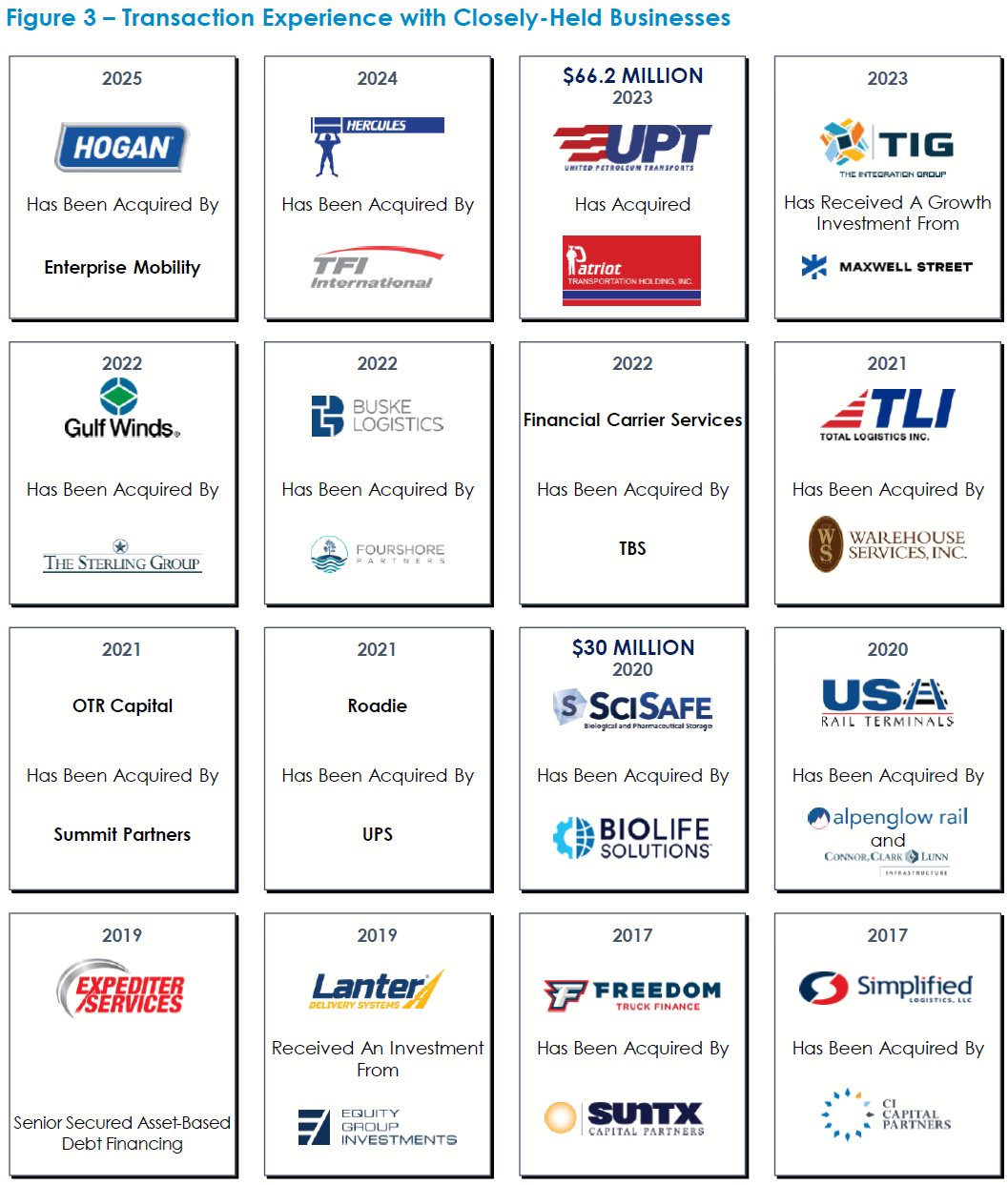
For decades, Stephens’ Transportation & Logistics (“T&L”) group has focused on serving the unique needs of family-owned, closely-held and owner-operated businesses. As a family-owned business with a 90+ year legacy, Stephens has a deep appreciation for the importance and complexity associated with the sale or partial monetization of a privately-owned business. Closely-held businesses are a core part of our T&L franchise. In this whitepaper, we reflect on the most common issues we encounter with our clients, and how owners can address them to help improve market readiness.

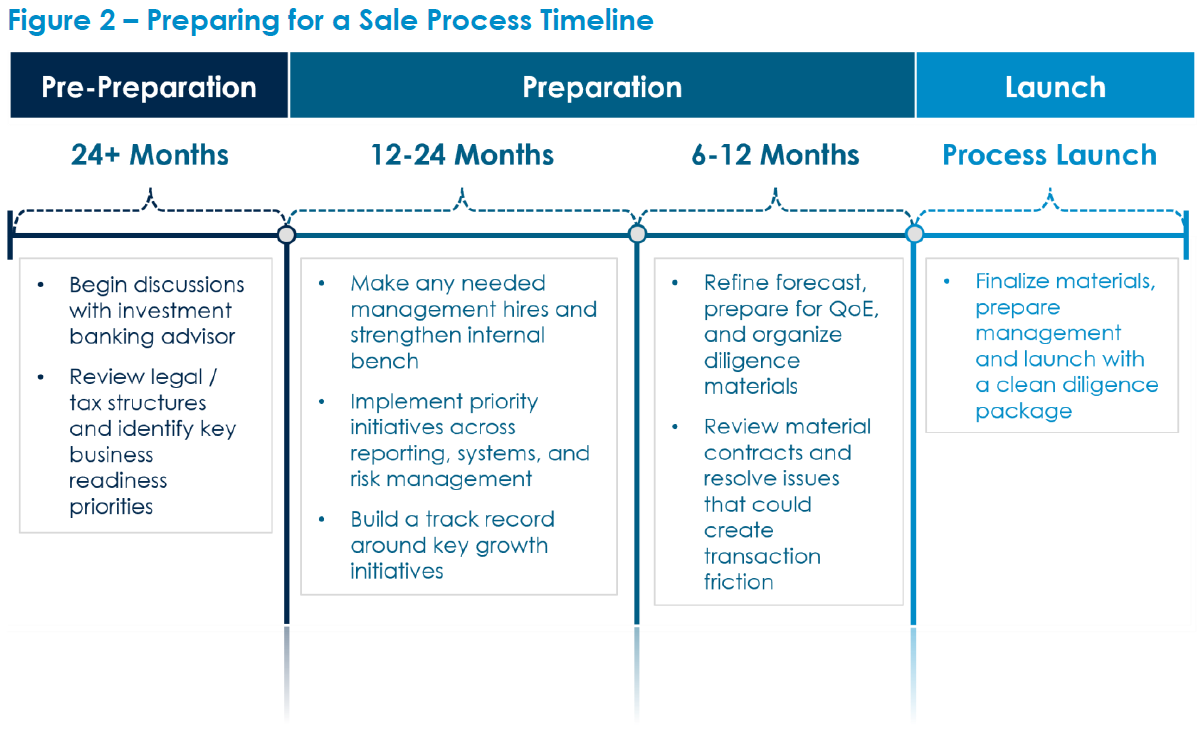
Our relationships with closely-held and owner-operated businesses are typically developed years before any material transaction or liquidity event. That lead time allows owners to address a few key areas that can help improve marketability, transaction efficiency, and ultimately value. Our preparation with owners begins with understanding their unique objectives, including desired liquidity, post-close involvement, and priorities related to legacy and company culture. Below, we summarize the functional areas where focused improvement can help position a business for stronger valuation outcomes, greater transaction certainty, and a more efficient process. While not exhaustive, these items apply across the T&L landscape, regardless of subsector.
  • Finance:
    • Audit: completing a financial audit with a reputable accounting firm, covering three years of income statements and two years of balance sheets, before contemplating a liquidity event helps buyers and capital providers verify reported financial information with confidence. In many cases, audited or independently reviewed financials may be required to access certain debt financing markets. Without them, financing alternatives can narrow, which can negatively impact valuation and increase the diligence burden. While time-consuming, the audit process establishes rigor within the financial reporting system and helps ensure compliance with GAAP.
    • Financial reporting: the marketplace seeks timely, easily digestible financial data. CFOs should target an efficient, GAAP-compliant month-end close of no more than 15 calendar days, enabled by the use of established financial software that is appropriate for the scale of the business. Ideally, the financial reporting system will interface directly with key operational systems, so executives can make KPI-informed decisions and produce insightful business intelligence reports.
    • Financial planning & analysis: monthly and quarterly reporting can help key stakeholders contextualize recent business trends. A robust annual budgeting process along with a long-term forecast can promote internal accountability and can force management to consider day-to-day decisions in light of longer-term company goals.
    • Earnings quality: limiting one-time / non-recurring add-backs and pro forma adjustments can improve the credibility of adjusted EBITDA and support valuation. Buyers and lenders expect adjustments to translate into cash flow. As add-backs become a larger share of adjusted EBITDA, scrutiny increases and “full credit” becomes less likely. As a general rule, any aggregate add-backs in excess of 25% of adjusted EBITDA are unlikely to be fully underwritten.
  • Management Team:
    • Full team: having a complete and established executive team in place is important when going to market. Ideally, the team will have been working together for at least one year, allowing key responsibilities and areas of expertise to become well established across the leadership group.
    • Bench strength: demonstrating depth across the management team is important when engaging with prospective acquirers and helps mitigate concerns around “key man” risk. Similarly, having a strong internal bench of future leadership talent can help address succession risk.
    • Market compensation: the team is appropriately compensated, incentivized around KPIs, and aligned with ownership.
  • Legal & Tax Readiness:
    • Legal / contracts: owners should review and organize material contracts and corporate records, identifying any change-of-control provisions, contingent liabilities, and near-term renewals that could create friction during due diligence or delay closing.
    • Tax planning: at least one year in advance of a liquidity event, and ideally more than two years in advance, owners of closely-held businesses should review their legal and tax structures with their legal and tax advisors. Doing so well in advance of a sale provides time to make any necessary changes and evaluate strategies that may improve after-tax proceeds.
  • Scale:
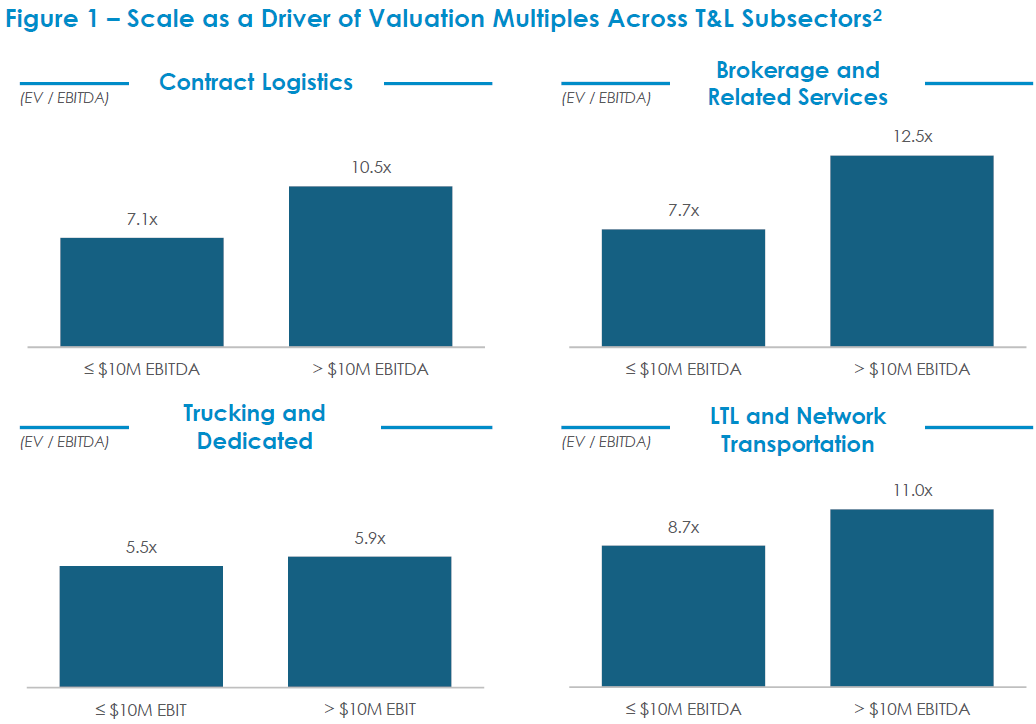
    • Scale is an important valuation factor. Larger businesses are often perceived as less risky and can attract a broader buyer and lender universe. Across the T&L subsectors analyzed, businesses with more than $10 million of EBITDA have historically commanded higher average transaction multiples. Where practical, achieving greater scale, including, in many cases, approaching or exceeding $10 million of EBITDA, may broaden the buyer universe and support valuation.1
T&L Whitepaper 1
  • Operations:
    • Equipment / PP&E: for asset-intensive businesses, maintaining regular maintenance and replacement schedules is imperative. Deferring necessary capital expenditures to improve near-term cash flow can negatively affect valuation, as buyers may account for the future investment required to restore asset quality. For growth-related capital expenditures, maintain rigorous return on capital metrics that stand up to historical backtesting.
    • Systems: information technology systems should be able to scale. If IT investments are not adequate, buyers will likely assess the resulting “technical debt” and incremental costs required to bring systems up to standard, which may reduce buyer interest and negatively affect valuation.
    • Risk management: insurance coverages should be assessed annually, with policy limits adjusted as the business grows. As the risk of “nuclear” verdicts has increased, buyers are scrutinizing excess coverage more closely relative to a company’s size and risk profile. A company’s internal risk management strategy has also become a core focus in confirmatory diligence, with regular safety training, inspections, reporting, and, where appropriate, third-party audits increasingly viewed as important indicators of a well-managed risk program.
  • Growth & Customers:
    • Commercial: customer diversity is an important measure of buyer risk assessments. The more revenue is concentrated among a small group of customers, the greater the perceived risk, which can negatively affect valuation. Conversely, a diversified customer base with long-standing relationships can improve a buyer’s underwriting thesis.
    • Growth: proving a repeatable ability to grow can be an important factor in supporting a premium valuation. The best growth strategies are programmatic and supported by a refined, repeatable blueprint. There are many ways to grow, but having one or two primary channels with a demonstrated history of success and runway ahead is critical for buyer conversations.
T&L 2


T&L 3


For more information on Stephens’ capabilities and experience with family-owned businesses in the T&L sector, please contact any of the authors below:


About the Experts

Michael Miller

Managing Director, Head of Transportation & Logistics, Investment Banking

Read full bio

Connor Hustava

Managing Director, Investment Banking

Read full bio

Marshall McKissack

Managing Director, Head of M&A Advisory, Investment Banking

Read full bio

Jacob Evans

Vice President, Investment Banking

Read full bio

  1. 1. Profitability threshold based on EBITDA for Contract Logistics, Brokerage and Related Services and LTL and Network Transportation; EBIT for Trucking and Dedicated. 2. Select transactions since 2015. * Illustrative transaction examples. Outcomes may vary by transaction and market conditions. Past engagements are not indicative of future results. This communication has been prepared by Stephens’ Investment Banking Department for informational purposes only for distribution to clients and prospective clients. It is not a solicitation, recommendation or offer to buy or sell any security and does not provide information on which an investment decision to purchase or sell any securities could be based. It does not purport to be a complete description of the securities, markets or developments referred to in this communication. This communication is not a research report, was not prepared by Stephens’ Research Department or by any research analysts or other persons licensed or qualified as research analysts, is not subject to the same rules and procedure s as a research report, is not intended to provide a sufficient basis for an investment decision, is not intended for distribution to any retail customers and should not be considered a research report. Stephens does not make (and is prohibited from making) any promise of favorable research coverage. Any views expressed in this communication may differ from those of Stephens or of Stephens’ Research Department. Information included in this communication was obtained from sources considered to be reliable, but Stephens has not independently verified such information and does not guarantee that it is accurate or complete. No representation or warranty, express or implied, is made as to the accuracy, completeness, or correctness of any such information. To the full extent permitted by law, neither Stephens nor any other person accepts any liability whatsoever for any direct, or indirect or consequential loss or damage arising from any use of the information contained in this communication. No subsequent publication or distribution of this communication shall mean or imply that any such information remains current at any time after the date of preparation of this communication. Stephens does not undertake to advise you of any changes in any such information. Additional information is available upon request. Please assume that Stephens or its employees or affiliates hold long or short positions in any of the securities mentioned, and at any time may sell or buy any such securities, make a market in any such securities, conduct underwritings for any such securities or provide other investment banking services involving any of such securities. The views and opinions expressed in this communication are those of the author, or the person(s) to whom such view or opinion is attributed, and do not necessarily reflect the opinions of Stephens or any other person or entity. Any expressions of opinion or forward-looking statements included in this communication are based on information available on the date of preparation, speak only as of such date and are subject to change without notice. No assurance can be given that any of such opinions or statements will prove correct. Past performance is not indicative of future results. Artificial intelligence tools are often used in the preparation of communications and other materials prepared by Stephens’ Investment Banking Department, including assisting in data analysis, pattern recognition, and content drafting for such communications and other materials. Nothing in this communication should be viewed as accounting, tax, regulatory or legal advice; please contact your professional accounting, tax, regulatory or legal advisors for such advice. Data referenced in this communication has been sourced from company announcements and from the third-party data sources or data providers cited in this communication, including, but not limited to, S&P Global Market Intelligence and/or its Affiliates (Copy right © 2026 S&P Global Market Intelligence and/or its Affiliates. All Rights Reserved. Reprinted with permission of S&P Global Market Intelligence, Bloomberg Finance L.P. and PitchBook Data Inc. – [Data has not been reviewed by PitchBook analysts or any other external reviewer”] (collectively “Data Providers”). Unless otherwise explicitly stated, any financial data regarding a company or an industry included in this communication reflects historical financial data or estimates of future performance obtained from third party sources. All financial metrics, ratios and estimates included in this communication have been sourced from the Data Providers and other sources cited in this communication or reflect calculations based upon data sourced from the Data Providers and other sources cited in this communication. Please note that Data Providers and other sources cited in this communication do not guarantee the accuracy, adequacy, completeness or availability of any content provided and are not responsible for any errors or omissions, regardless of the cause, or for the results obtained from the use of such content. In no event shall the Data Providers or any other sources cited in this communication or Stephens be liable for any damages, costs, expenses, legal fees or losses in connection with any use of the data and/or financial materials included in this communication. “Stephens” (the company brand name) is a leading family-owned investment firm that includes Stephens Inc. (member NYSE/SIPC), Stephens Investment Management Group, LLC, Stephens Insurance, LLC, Stephens Capital Partners LLC and Stephens Europe Limited (Registered office: 12 Arthur Street, London, EC4R 9AB, Registered number 8817024), which is authorised and regulated by the Financial Conduct Authority. © 2026 Stephens