Federal Reserve Delivers Expected Rate Cut,
Signals Cautious Outlook Ahead
On Wednesday, the the Federal Open Market Committee (FOMC) announced its December policy decision, reducing the federal funds target rate by 25 basis points to a new range of 3.50%–3.75%. The decision, widely anticipated by market participants, marks the Fed’s third rate cut as it continues to respond to a shifting economic landscape.
Tempered Growth Outlook
In its accompanying statement, the Committee noted that economic activity continues to expand at a moderate pace, even as the labor market shows signs of cooling. Job gains have slowed, and the unemployment rate has edged higher, factors that the Fed acknowledged as contributing to a more tempered growth outlook.Divergence Within the Committee
The decision was not unanimous, with two members preferring to leave rates unchanged and one advocating for a more aggressive 50-basis-point reduction, reflecting the range of views within the Committee as it navigates a complex policy environment.Despite these differences, the FOMC reiterated its firm commitment to its dual mandate of maximum employment and price stability, reaffirming its long-term inflation target of 2%. The Committee emphasized its readiness to adjust the stance of monetary policy as needed should risks emerge that threaten progress toward these objectives.
Dovish Tone in the Fed’s Decision
While the 25-basis-point cut itself was largely expected, markets were notably more focused on the dovish tone embedded in the Fed’s decision to resume the purchase of short-term Treasury securities. This move was interpreted as a subtle but significant step toward further easing, particularly in light of ongoing macroeconomic headwinds.Looking Ahead
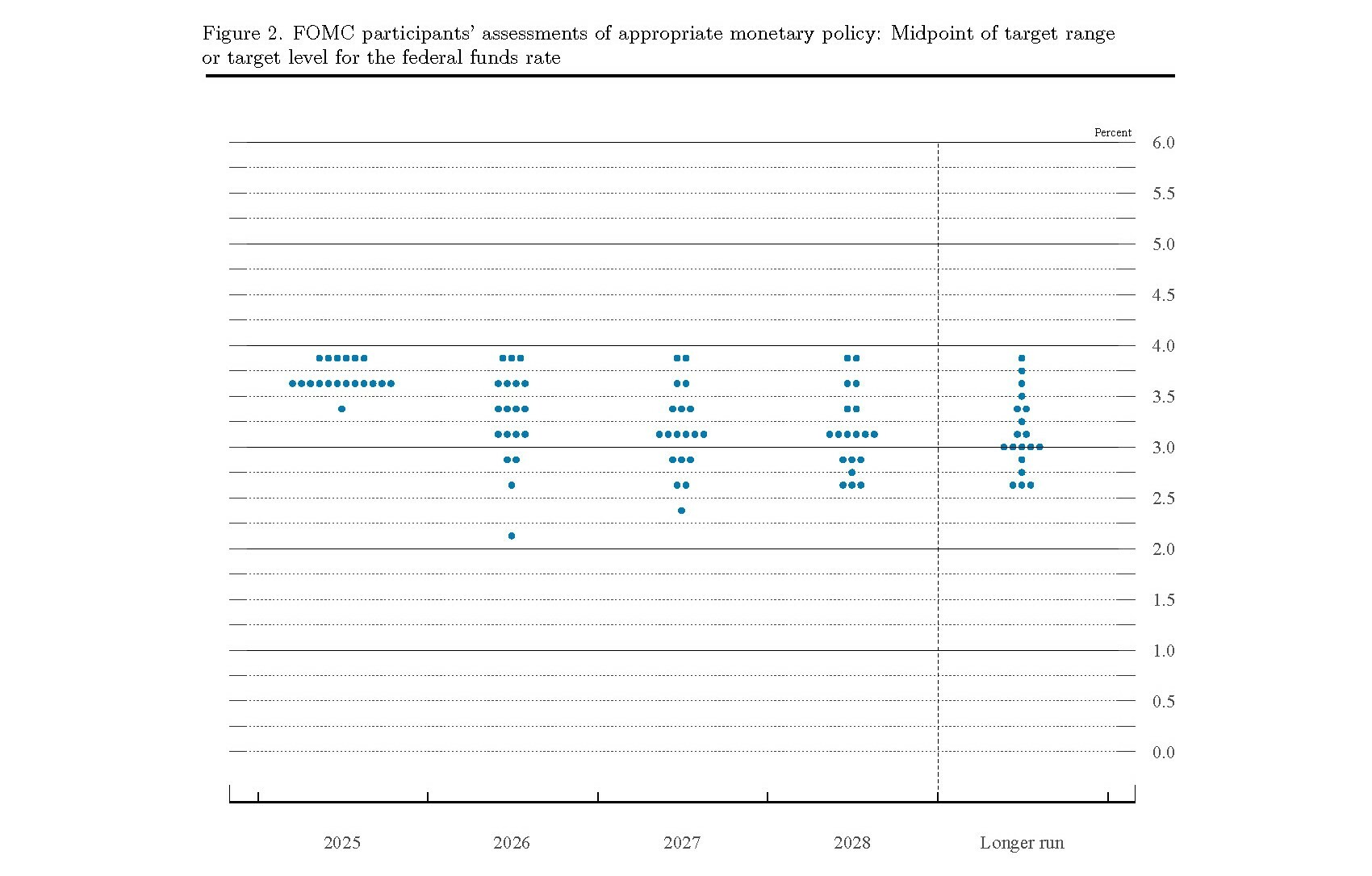
However, the Committee also indicated a higher threshold for additional rate reductions going forward. Updated projections show only one rate cut expected in 2026 and another in 2027, suggesting that policymakers are inclined to proceed with caution from here.
Today’s announcement underscores the Fed’s balancing act between supporting economic growth and maintaining price stability. As the year draws to a close, market attention will increasingly turn to incoming data and how it may shape the policy path in 2026 and beyond.