FOMC Delivers Second Consecutive Rate Cut
as Growth Slows and Uncertainty Mounts
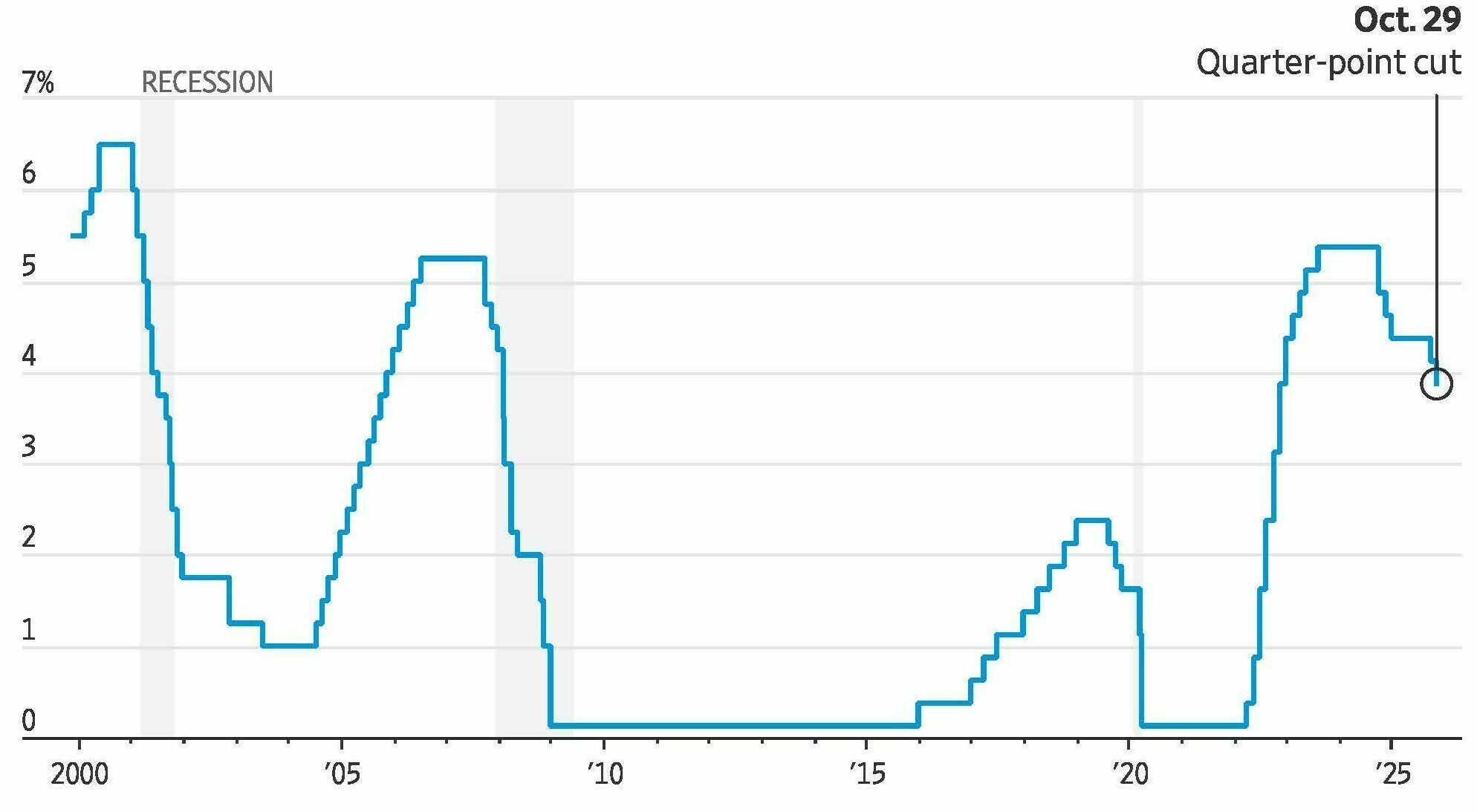
On Wednesday, the Federal Open Market Committee (FOMC) announced a second consecutive 25-basis-point reduction to the federal funds target range, bringing it to 3.75%–4.00%. This latest move underscores the Fed’s ongoing response to signs of slowing economic momentum and reflects a continued shift toward policy normalization in an increasingly uncertain environment.
Signals Point to a More Cautious Path Ahead
While the rate cut was widely expected by markets, the tone from policymakers signaled a more cautious path ahead. In the post-meeting press conference, Federal Reserve Chair Jerome Powell emphasized that an additional cut at the December meeting “isn’t a foregone conclusion,” indicating that any further action will depend heavily on incoming economic data. Although the FOMC had previously penciled in another rate cut before year-end, Powell’s comments suggest a data-dependent approach going forward.
The Committee reiterated that the decision to ease monetary policy is aimed at supporting growth by reducing borrowing costs and encouraging both consumer spending and business investment. However, recent data—including delayed figures due to the ongoing government shutdown—have pointed to a continued deceleration in labor market strength. While the Labor Department’s September jobs report remains pending, other indicators show weakening job creation, adding to the rationale behind the Fed’s recent actions.In its policy statement, the FOMC reaffirmed its commitment to its dual mandate of maximum employment and price stability, with a long-term inflation target of 2%. Officials noted they will continue to assess a wide range of information, including labor market conditions, inflation dynamics, financial developments, and international risks, in determining the appropriate path of policy.
Divergence Within the Committee
The vote to approve the October rate cut passed 10–2, highlighting some divergence within the Committee. Kansas City Fed President Jeffrey Schmid dissented, favoring no change to rates, while Fed Governor Stephen Miran dissented in favor of a more aggressive 50-basis-point cut—underscoring differing views on the appropriate level of support for the economy. Powell also noted that job growth has slowed substantially, attributing part of the deceleration to lower immigration and reduced labor force participation, both of which continue to shape the evolving economic landscape.
Looking Ahead
Markets had already priced in the October cut, and attention has now turned to the FOMC’s final meeting of the year on December 9–10. With much of the government still shut down, several key data releases have been delayed. However, once economic reporting resumes, indicators such as employment figures, inflation trends, and consumer activity will be critical in determining whether another policy move is warranted before year-end.